Royal jelly has long fascinated people around the world due to its unique origin, nutrient-rich composition, and historical use as a prized bee product. In 2025, interest in this “queen bee food” continues to grow, not only among wellness enthusiasts but also within beauty and nutritional circles.
In this blog, we’ll explore what royal jelly is, how it has been used historically, how people commonly incorporate it today, and a balanced look at the potential royal jelly benefits without making unsupported health claims.
What Is Royal Jelly
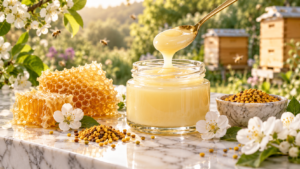
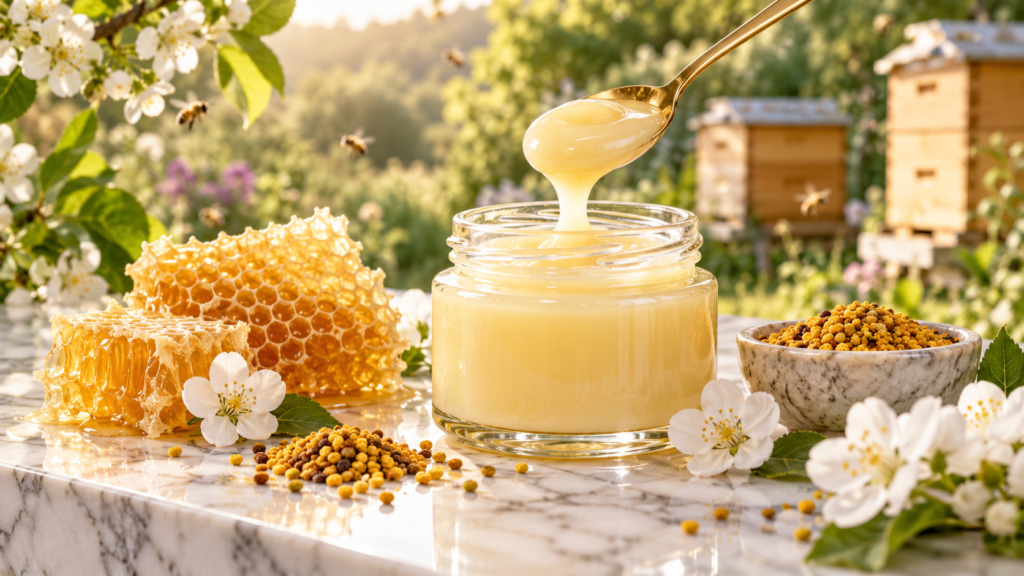
Royal jelly is a milky-white, gelatinous secretion produced by worker honey bees from glands in their heads. Bees feed this substance to queen larvae and the adult queen throughout her life, distinguishing it from honey or pollen.
Worker bees consume honey and pollen, digest them, and secrete royal jelly to nourish larvae selected to become queens. This exclusive diet enables the queen to grow larger and live far longer than other bees, up to five years compared to weeks for workers.
Chemically, royal jelly comprises about 67% water, 12.5% proteins, 11% simple sugars, 6% fatty acids, and 3.5% 10-hydroxy-2-decenoic acid (10-HDA). It also includes trace minerals, unique proteins like major royal jelly proteins (MRJPs), and fatty acids such as trans-10-Hydroxy-2-decenoic acid.
Nutritional Composition
Royal jelly packs a variety of nutrients that contribute to its reputation as a complete food source. Proteins make up around 12-18% of its dry weight, including essential amino acids vital for tissue maintenance.
Vitamins abound, particularly B vitamins like pantothenic acid (B5), pyridoxine (B6), thiamin (B1), riboflavin (B2), niacin, folic acid, inositol, and biotin. These water-soluble vitamins support metabolic processes when consumed as part of a balanced diet.
Minerals such as calcium, potassium, iron, copper, zinc, magnesium, and manganese add to its profile. Fatty acids, including unique ones like 10-HDA, along with sugars and enzymes, round out this nutrient-rich matrix.
Antibacterial components and acetylcholine further enhance its complexity. Variations in composition occur based on factors like bee diet and season, with pollen sources influencing quality.
Historical Use of Royal Jelly
Royal jelly’s legacy spans ancient civilizations, revered as an elite substance for vitality. In ancient Egypt, bee products, including royal jelly, featured in rituals, embalming, and skincare for pharaohs like Cleopatra, who prized it for rejuvenation.
Greeks, including Hippocrates, incorporated it into healing regimens for strength and recovery. Chinese emperors dubbed it the “food of emperors” for promoting longevity, energy, and vitality into old age.
Indian Maharajas valued it for youthful vigor. Across Asia and Europe, rulers sought it to maintain potency and ward off decline. These traditions positioned royal jelly as a rare elixir, often reserved for nobility due to harvesting challenges.
By the 20th century, it gained traction in Europe as a supplement, with modern extraction methods making it more accessible.
Traditional Uses Across Cultures
Beyond royalty, royal jelly integrated into folk medicine worldwide. Egyptians linked it to fertility rites and eternal youth preservation. In Oriental practices, it supported rulers’ extended vitality.
Ancient Greeks used bee secretions for physical endurance. Twentieth-century wellness trends amplified its role in apitherapy, the therapeutic use of bee products.
Historical texts note its application in tonics for overall nourishment. Cultures harvested it painstakingly from hives, valuing purity for elite consumption.
Modern Uses of Royal Jelly
Today, royal jelly appears in supplements like capsules, drops, powders, and fresh gel, often taken sublingually or mixed into foods. Fresh forms require refrigeration to preserve bioactive compounds.
Dosages typically range from 50-300mg daily, starting low to assess tolerance. It’s consumed on an empty stomach for better absorption.
Topical applications thrive in skincare, where it’s blended into creams, serums, and masks. Users apply it directly or via products for hydration routines.
Top Royal Jelly Benefits to Know
Royal jelly benefits often center around the nutrient profile and functional uses people have reported, rather than clinical health claims. The scientific research is still evolving, and while many people find value in royal jelly as a supplement or ingredient, it’s crucial to be cautious and well informed.
Below are the key areas often highlighted when discussing the potential royal jelly benefits.
1. Nutrient-Rich Composition
Royal jelly’s nutrient profile sets the foundation for its appeal. It contains essential amino acids, B-vitamins (such as pantothenic acid), trace minerals, and unique fatty acids. These nutrients have long been associated with general bodily functions and metabolic processes, which is why royal jelly is often described as a nutrient-dense natural substance.
The presence of vitamins, proteins, and bioactive compounds makes royal jelly a compelling ingredient for both supplement use and incorporation into wellness routines.
2. Support for Immune System Function
Many traditional and nutritional sources describe royal jelly as containing substances with antioxidant and antimicrobial properties. These characteristics have led people to view it as a component that may support overall immune system response.
Antioxidants help protect cells from oxidative damage — a topic studied in a number of fruit and plant-derived foods as well. Royal jelly’s unique mix of proteins and fatty acids adds to its interest as a potential immune-supportive food.
3. Energy and Vitality Support
Royal jelly contains B-complex vitamins (notably pantothenic acid or B5), carbohydrates, and easily metabolized proteins. These components are commonly linked to everyday energy metabolism and the body’s biochemical processes that contribute to how people feel throughout the day.
Because of this, many supplement users include royal jelly as part of their morning or daily routines as a natural source of nourishment rather than as a targeted remedy.
4. Skin-Related Applications
Royal jelly is often used in cosmetic formulations — an application that leans on its nutrient content and protein structure. Some skin care products include royal jelly for its moisturizing and conditioning qualities, and it is featured in ingredients lists for creams, masks, and serums.
In addition to topical products, some consumers mix royal jelly with honey and other nutritive substances for use in at-home skin care rituals.
5. Historical and Cultural Uses in Beauty and Longevity Rituals
Royal jelly’s role in historical beauty practices is noteworthy. For centuries, various cultures have valued bee products for enhancing skin texture and providing oral nourishment.
This explains why royal jelly appears in traditional beauty recipes and continues to show up in modern cosmetic product lines — blending historical appreciation with contemporary formulas.
6. Traditional Use in Reproductive Wellness Contexts
Although research is still limited, royal jelly has historically been linked with reproductive health support because of its nutrient density. This historical use reflects a broader tradition of bee products being part of diets that emphasize nutrient-rich whole foods.
It’s important to distinguish historical and traditional uses from clinical evidence — not all traditional applications have been validated in human research.
7. Versatility in Daily Use
Royal jelly benefits are often tied to versatility. It can be:
- Mixed with honey and consumed with tea or on its own.
- Added to smoothies or foods as a nutritional boost.
- Taken in capsule form for convenience.
- Applied topically in cosmetic products.
Its mild, slightly tangy taste distinguishes it from pure honey.
How People Commonly Use Royal Jelly
When considering the use of royal jelly, individuals typically follow several key practices depending on their goals and preferences:
As a Daily Nutrient Booster
Many consume royal jelly in small amounts (e.g., spoonfuls of fresh royal jelly or measured doses in capsules) to round out their nutrient intake.
With Honey
Royal jelly is sometimes blended with regular honey to improve palatability and enhance the sensory experience.
In Beauty and Skincare
Cosmetic companies often infuse lotions, serums, and creams with royal jelly for its moisturizing and nourishing ingredients.
In Traditional and Cultural Preparations
In countries with strong beekeeping traditions, royal jelly might feature in artisanal foods, tonics, and wellness practices passed down through generations.
Suggestions for Use and Selection
If you’re considering incorporating royal jelly into your routine, here are a few practical tips:
- Check the source and purity: Royal jelly quality can vary. Look for products that specify sourcing and storage conditions.
- Know your format: Decide whether you prefer raw, freeze-dried powder, capsules, or honey blends.
- Storage matters: Fresh royal jelly is sensitive to heat and should be kept cool or frozen for long-term storage.
- Start with small servings: Because royal jelly is concentrated and unique in taste, many consumers begin with small doses.
- Be mindful of allergies: Bee products can trigger allergic responses in sensitive people, so patch testing topical use or consulting with a professional is advisable.
Royal Jelly vs. Royal Honey: Clarifying the Terms
Royal honey and royal jelly are often used interchangeably, but there are subtle differences:
- Royal jelly refers specifically to the secretion used to nourish queen bee larvae.
- Royal honey commonly refers to honey that has been infused with royal jelly or enriched with other bee-derived substances.
Understanding this distinction helps consumers choose the product that aligns with their preferences — whether they seek pure royal jelly or prefer it integrated into a honey blend.
Safety and Considerations
Royal jelly is generally safe for most people when consumed or used as intended, but it is not without considerations:
- Allergic reactions: Because it is a bee product, royal jelly can cause allergic reactions in some individuals — particularly those with bee pollen or venom sensitivities.
- Concentration variability: Different products may have varying concentrations of royal jelly, so labels and sourcing information matter.
- Supplement regulation: Dietary supplements are not regulated as rigorously as medications in many regions, so third-party testing is a plus.
Final Thoughts
Royal jelly remains a fascinating natural substance with a long history of use and enduring popularity. Its royal jelly benefits are rooted in its nutrient profile and traditional applications, and its versatility — from a nutritional supplement to a cosmetic ingredient — has helped sustain its global appeal.
By understanding what royal jelly is, appreciating how it’s been used historically, and knowing how people commonly incorporate it today, you can make an informed decision about whether it fits your personal wellness or beauty regimen. Whether you are drawn to its unique nutrient combination, its storied cultural past, or its practical use formats, royal jelly continues to occupy a unique place in the world of bee-derived products.
More Resources
What Is Better For Sleep Red Or Gold Kratom?
Kratom vs Weed: Which One’s Better for Pain, Mood, and Relaxation?
Kratom and Oxycodone: Dangerous Combo or Potential Alternative?