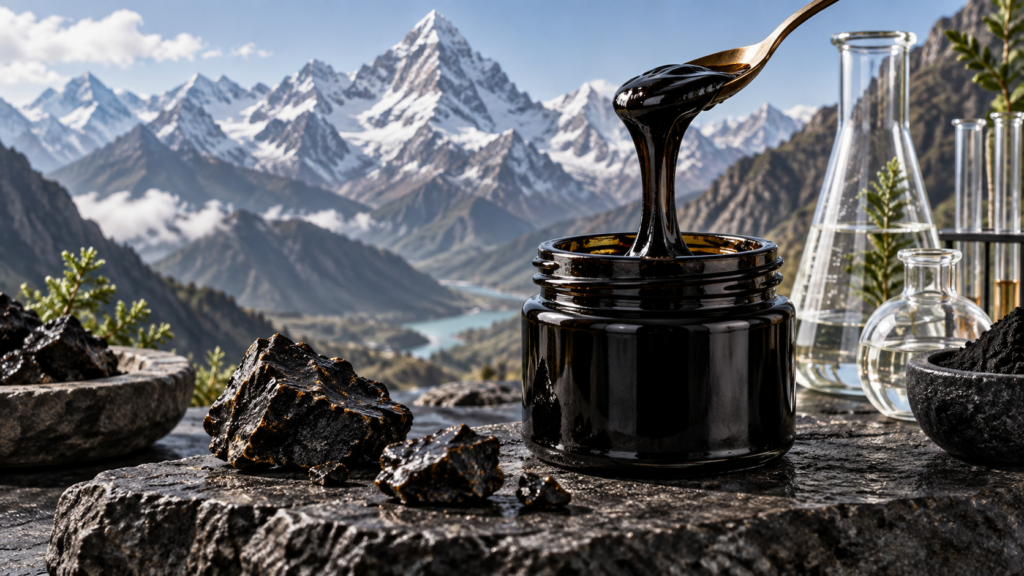
Shilajit is a very fascinating natural product of the botanicals and traditional wellness tradition in the world. Traditionally referred to as a mineral resin or as the mountain tar, it has had a long history of traditional use in Central Asia, especially in the areas of the Himalayas, Altai Mountains, and Tibet.
The fact that shilajit has a rich cultural heritage is not the most intriguing thing about it, however, it is the increase in scientific interest in the modern world regarding its naturally occurring constituents, such as fulvic acid, minerals, and other bioactive substances.
Over the past few years, scientists have started paying more attention to the reactions of these compounds with the body and to the reasons behind the status of shilajit that raised some concerns in a range of scientific debates. Though research is in progress and results are mixed, what is apparent is that due to the special composition, shilajit has become a significant issue in the wellness world, both traditional and modern.
In this blog guide, we explore everything you need to know about using shilajit: its origins, composition, potential benefits supported by early research, how it interacts with the body, and what science currently understands about it, all while maintaining a balanced, responsible interpretation of its role.
What Is Shilajit?
Shilajit is a sticky, tar-like resin that forms over centuries from the gradual decomposition of plant material and minerals trapped in high-altitude rock layers. When temperatures rise in the summer, this resin seeps from crevices in the mountains, where it can be collected.
Although the process looks simple, shilajit’s development is incredibly slow and complex. It requires:
- The right altitude
- The right plant diversity
- The right geological pressure
- Centuries of natural fermentation and breakdown
The result is a concentrated substance rich in minerals, fulvic acid, and naturally occurring organic compounds.
Shilajit Through History
For thousands of years, traditional systems of wellness recognized shilajit as a rare and valuable natural material. It was often considered a “revitalizing” botanical resin, prized for its uniqueness, scarcity, and powerful earthy composition.
Where Does Shilajit Come From?
While shilajit can occur in many mountain ranges, the most well-known deposits come from:
1. Himalayan Shilajit
Arguably the most widely recognized type, Himalayan shilajit is harvested from Nepal, India, and Bhutan. These regions have long documented its traditional use.
2. Altai Shilajit
Sourced from the Altai Mountains in Russia and Mongolia, this variety is also popular due to the mineral diversity of the region.
3. Tibetan or Gilgit-Baltistan Shilajit
Some of the highest-altitude sources come from Tibetan plateaus and northern Pakistan. This high elevation allows for plant-rich deposits that take centuries to break down.
Why Geography Matters
Location influences the mineral profile, potency, and purity of shilajit. The plant varieties that decompose into shilajit differ by region, creating slight variations in chemical composition.
However, regardless of origin, the highest-quality shilajit is typically purified before being made available for consumers.
What Makes Shilajit Unique?
Shilajit’s uniqueness comes from its complex combination of naturally occurring substances. While exact compositions can vary, high-quality shilajit typically contains:
1. Fulvic Acid
Fulvic acid is one of the most notable components of shilajit. It contributes to the resin’s earthy taste and dark color and is studied for its ability to enhance nutrient absorption and support the body’s internal balance.
2. Humic Substances
These organic molecules form through the natural decomposition of plant material and can support the body’s natural processes.
3. Trace Minerals
Shilajit contains a wide array of naturally occurring minerals, often cited to exceed more than 70 different trace elements.
4. Plant-Based Phytocompounds
These occur naturally in the resin as a result of centuries of botanical breakdown.
Together, these components make shilajit one of the most compositionally dense natural substances used in traditional wellness practices.
What Does Shilajit Do?
Although scientific studies on shilajit continue to expand, most discussions center on how its natural components may interact with the body’s everyday functions.
Below are commonly researched areas that scientific literature has explored, without making health claims or assumptions about outcomes.
1. Supporting Energy Production
Shilajit is often discussed in connection with cellular energy production, especially because of its fulvic acid content. Some research explores whether it can support the body’s natural metabolic processes by helping the body utilize nutrients more efficiently.
2. Supporting Natural Mineral Intake
Because shilajit contains a variety of trace minerals, it is often used as a natural way to supplement mineral intake.
3. Supporting Cognitive Function Discussions
Early scientific studies examine whether fulvic acid’s natural antioxidant properties may influence cognitive processes.
Again, it’s essential to note that these areas of study are ongoing and should not be interpreted as medical claims—research continues to explore how shilajit interacts with normal body function.
4. Supporting Natural Recovery and Balance
Some wellness enthusiasts use shilajit for general vitality, though scientific discussions remain ongoing.
Shilajit Benefits for Men
1. Boosts Testosterone Levels
Granted, one of the best-laid-out shilajit advantages to men is that it naturally enhances testosterone, which is the hormone behind male vitality, muscle development and vigor, sex drive, and overarching vigorousness.
Cases of patients already demonstrate the benefits of taking shilajit and increased body health, as well as end-testosterone and DHEAS levels by an average of 63 and 22 percent, respectively.
2. Enhances Energy and Stamina
Shilajit affects the contents at the cellular level through improving the functions of mitochondria, which is the key to the production of ATP, the primary energy molecule in the body.
This implies higher levels of sustained energy, lower incidences of fatigue, and increased endurance on both day-to-day and athletic performance.
3. Improves Sexual Health and Fertility
Ayurveda Shilajit has long been known as a natural aphrodisiac and fertility enhancer. Scientific evidence indicates that it could enhance the sperm count, sperm motility, and reproductive health.
Shilajit aids in the improvement of sexual performance and sex drive by maintaining healthy levels of testosterone and proper circulation of the blood.
4. Supports Muscle Growth and Recovery
There is a special advantage that shilajit gives to physically active men. It reduces oxidative stress in the muscle tissues, which enhances the absorption of nutrients and promotes repair of body muscles, due to its rich mineral later and antioxidant activity.
Shilajit can possibly reduce inflammation that occurs after rigorous workouts, expediting the recovery process.
5. Reduces Stress and Enhances Mental Clarity
Shilajit also aids adaptation and enhances adrenal function stimulated by physical and mental stress, as it is an adaptogen. It encompasses cortisol and balances it. According to multiple users, actions improve focus, memory sharpens, and they also become more resilient emotionally.
6. Promotes Heart Health
The antioxidant and anti-swelling effectiveness of Shilajit possesses the ability to provide cardiovascular wellness by facilitating cholesterol and triglyceride levels, circulation, as well as appropriate blood pressure.
Supplementation with shilajit at a total dosage of 100 milligrams in some studies proved to reduce the risk of heart disease by decreasing total cholesterol and triglycerides.
7. Strengthens Immune Function
A cell is safeguarded against oxidative stress and maintained by shilajit minerals, fulvic acid, and antioxidants that promote healthy body defense. It can also minimize infections and enhance quick healing in diseases with its regular consumption.
8. Supports Healthy Aging
As old age draws near, they experience a natural loss of energy, loss of muscle strength, and decline in cognitive impairment. The antioxidant-rich composition of shilajit aids in battling cell destruction, slowing inflammation, and extending life span.
Its minerals and bioactive substances enhance tissue regeneration and strength, and so the ingredient could be a great friend to any man who wishes to look and feel younger as he grows old.
9. Improves Cognitive Function
New studies indicate that shilajit can be neuroprotective, memory-enhancing, and lower cognitive decline. Shilajit and its fulvic acid have been investigated for their potential to prevent tau protein aggregation linked to neurodegenerative disorders, such as Alzheimer’s.
10. Aids in Weight Management and Metabolism
The process of balancing hormones and energy production may contribute to metabolic control, maintain a healthy level of blood sugar, and lead to fat loss when using Shilajit.
Some users claim to have better control of their weight and attain better body composition, planning with a balanced lifestyle, with shilajit.
How Shilajit Works in the Body
Although shilajit is not fully understood, scientists believe several mechanisms may explain its potential effects:
1. Natural Bioavailability Support
Fulvic acid may help carry minerals and nutrients throughout the body due to its molecular structure.
2. Antioxidant Role
Some studies look at how shilajit may influence cellular processes related to oxidative stress.
3. Mitochondrial Discussions
One area of research investigates whether shilajit may support the body’s natural mitochondrial efficiency, although findings vary.
4. Mineral Contribution
Because minerals play a foundational role in everyday body functions, shilajit’s trace minerals are a central reason people incorporate it into their routines.
Shilajit and the Body: What We Currently Know
A Balanced, Science-Informed View
Scientific literature suggests that shilajit’s most notable interactions with the body are related to:
- Natural antioxidant activity
- Nutrient absorption support
- Mineral supplementation
- Potential cognitive support discussions
- Assistance in natural energy processes
However, it’s essential to reiterate that these findings do not constitute medical claims. Shilajit research is ongoing, and much remains to be discovered.
How to Use Shilajit for Men’s Health
Choosing the Right Form
Shilajit is available in several forms, including resin, powder, and capsules. Resin is considered the purest and most potent, while capsules offer convenience and precise dosing.
Recommended Dosage
- Typical dose: 300–500 mg per day, taken with water or milk.
- Start low: Begin with the lowest effective dose and increase gradually as needed.
- Consult a healthcare provider: Especially if you have underlying health conditions or are taking medications.
Best Time to Take Shilajit
- Morning or early afternoon: For energy and focus throughout the day.
- With meals: To enhance absorption and reduce the risk of stomach upset.
Safety and Side Effects
Shilajit is generally well-tolerated when used as directed; however, it’s essential to choose purified, high-quality products to avoid contaminants such as heavy metals. Potential side effects are rare but may include:
- Mild digestive upset
- Allergic reactions (in sensitive individuals)
- Lowered blood pressure (in rare cases)
Precautions:
- Avoid unpurified or raw shilajit, which may contain harmful substances.
- Consult your doctor before use if you have gout, hemochromatosis, or are pregnant or breastfeeding.
Side Effects of Shilajit
What Users Should Know Before Starting
While most adults tolerate shilajit well, potential side effects may include:
- Digestive discomfort
- Changes in taste
- Upset stomach when taken on an empty stomach
- Sensitivity due to impurities found in low-quality shilajit
Why Purity Is Critical
Unpurified shilajit may contain harmful substances, such as heavy metals or contaminants absorbed from soil. Therefore, purchasing third-party-tested products is essential.
How to Choose High-Quality Shilajit
When looking for shilajit, consider the following:
1. Purity Testing
Reputable brands use third-party lab testing to ensure contaminants are removed.
2. Authentic Geographic Source
Himalayan, Altai, and Tibetan sources are often preferred.
3. Fulvic Acid Percentage
Higher-quality shilajit contains a significant percentage of fulvic acid.
4. Avoid Counterfeits
Products that look overly glossy, have odd odors, or appear too cheap may not be real shilajit.
Modern Research on Shilajit: What Science Says
Although research is ongoing, scientists find shilajit intriguing for several reasons:
- Its wide mineral profile
- High fulvic acid content
- Naturally occurring antioxidant compounds
- Potential impact on energy processes
Some clinical and animal studies examine shilajit’s potential influence on everyday cognitive and physical performance, oxidative stress, and nutrient utilization. However, results vary widely, and many studies call for larger sample sizes and longer-term monitoring.
Shilajit in Traditional Wellness Practices
Shilajit has long been used as a general vitality-supporting botanical. Traditional systems often viewed it as a grounding, balancing substance appreciated for its dense composition.
Although modern science is still uncovering its mechanisms, shilajit’s unique natural profile continues to make it popular in holistic wellness communities.
Final Thoughts
Shilajit can be called one of the most interesting substances of nature a mineral-bearing resin that over centuries is formed in the mountains of high altitudes. The great structure, containing fulvic acid, trace minerals, and bioactive compounds, has attracted the interest of non-modern researchers and traditional practitioners.
Although shilajit is not a medicine or medical therapy, scientific evidence indicates that the ingredients of this supplement can promote several natural body functions, including, but not limited to, nutrient absorption, antioxidant activity, etc. It is used as a supplement to the routine of people around the world, and it has a long history in traditional wellness systems, which makes it attractive.
Shilajit is likely to remain a subject of research in the future, as scientists and wellness enthusiasts will continue to show interest. In case you decide to use shilajit, make sure that the goods are of high-quality, purified, and take the dosage regulations into account.
More Resources
What Is Better For Sleep Red Or Gold Kratom?
Kratom vs Weed: Which One’s Better for Pain, Mood, and Relaxation?
Kratom and Oxycodone: Dangerous Combo or Potential Alternative?